

Mold is more than cosmetic—it can pose health risks and trigger litigation. Tenants suffering respiratory issues or allergies may pursue legal action, so the best defense is prevention. The steps below help landlords reduce risk and strengthen documentation. Need a neutral, third-party opinion? BioResponse Restoration provides courtesy visual inspections that map moisture and establish a baseline.
1. Know Your State’s Mold Liability Laws
Landlord-tenant statutes differ, but almost all require a habitable environment that includes controlling moisture problems.
Action: Confirm local requirements with a real-estate attorney or experienced property-management professional.
2. Control Moisture Before Mold Starts
Mold flourishes where water lingers. Key practices:
- Inspect roofing, plumbing joints, HVAC condensate lines, and window seals.
- Ensure bathroom, kitchen, and laundry vents exhaust outdoors.
- Specify mold-resistant drywall, paint, and caulk in wet areas.
- Dehumidify basements and other enclosed spaces, especially in humid regions.
A periodic moisture-mapping survey—often finished in an afternoon—can uncover hidden trouble spots.
3. Put Maintenance Expectations in Writing
Lease language should:
- Require tenants to report leaks or visible mold immediately.
- Prohibit disabling exhaust fans or chronic over-watering of plants.
- Assign tenants routine cleaning and ventilation duties.
Including a mold disclosure form and maintenance checklist at signing reinforces shared responsibility.
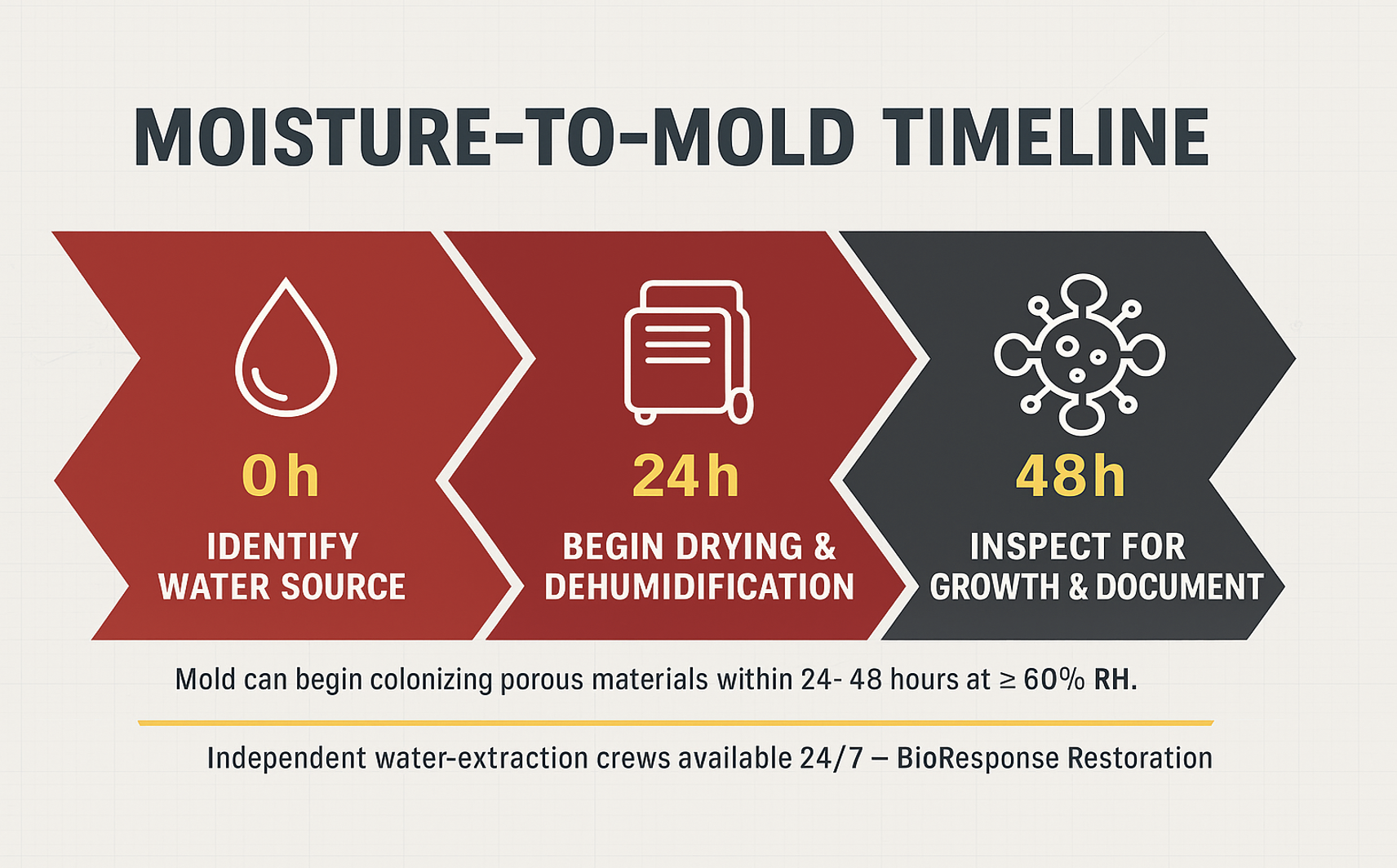
4. Dry Water Fast—Within 24 Hours If Possible
If a leak or flood occurs:
- Stop the water source.
- Begin drying and dehumidification within the first day.
- Photograph and log every action.
BioResponse maintains 24/7 crews who can extract water, set up commercial-grade drying equipment, and document the process if you lack in-house resources.
5. Inspect at Move-In and on a Schedule
Thoroughly document pre-move-in conditions (photos + notes), then repeat inspections annually or semi-annually:
- Catch early signs of leaks or mold.
- Verify tenants are ventilating bathrooms and using appliances correctly.
- Reinforce the prevention message.
6. Educate Tenants in One Page
Supply a concise handout covering:
- Early mold indicators (musty odors, discoloration).
- Proper use of exhaust fans and dehumidifiers.
- The goal of keeping indoor humidity below 60 percent.
Informed tenants act sooner and cooperate more readily.
7. Review Your Insurance
Standard landlord policies may exclude mold. Ask your broker about:
- Mold liability riders.
- Environmental hazard coverage.
- Professional liability protection for multi-unit properties.
8. Keep a Paper Trail
Maintain organized records of:
- Inspection and maintenance schedules.
- Repair invoices and contractor reports.
- All tenant communications about leaks or mold.
Good documentation shows you acted promptly and responsibly.
Conclusion
Mold claims are largely preventable. With disciplined maintenance, clear tenant guidelines, and rapid response to water events, landlords can safeguard both property and reputation. If you need objective documentation or emergency drying support, BioResponse Restoration offers inspections, moisture mapping, and response crews without upfront fees.
