

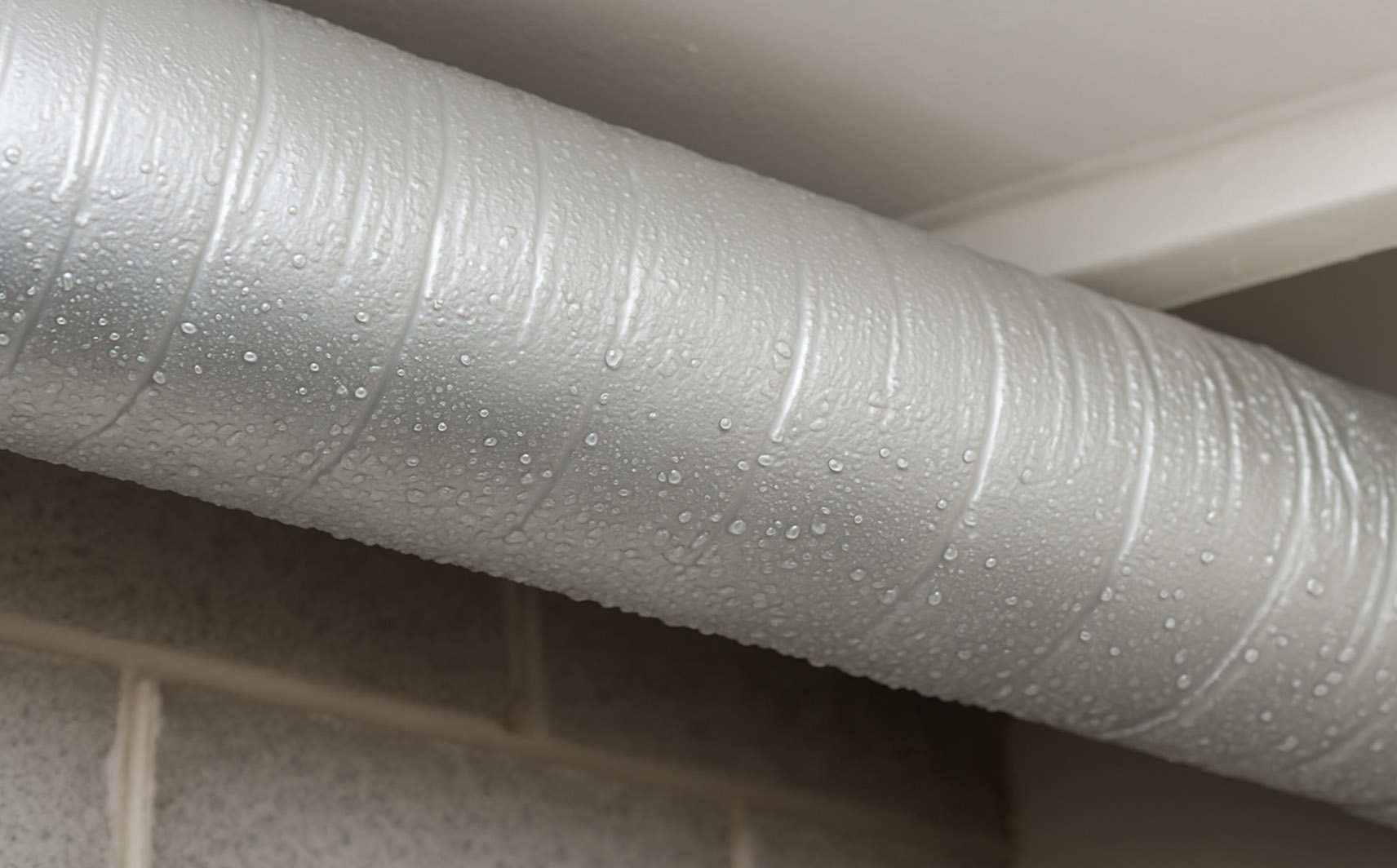
If you’ve ever noticed water droplets forming on your air conditioning ducts, you’re witnessing something known as “duct sweating.” While it may seem harmless, prolonged moisture can lead to issues like mold growth, ceiling stains, and even damage to your HVAC system. But why do AC ducts sweat in homes, and how can you prevent it? Living in the hot and humid area of South Florida your property is higher risk of sweating ducts and the damage it creates.
What Causes AC Ducts to Sweat?
AC ducts sweat for the same reason a cold drink “sweats” on a hot day: **condensation**. When warm, humid air comes into contact with a cool surface, the moisture in the air condenses into water droplets. In homes, this often happens when warm indoor air encounters the cold metal surface of your AC ducts.
Here are a few key factors that contribute to this problem:
- High Humidity Levels
When the humidity inside your home is too high, the air holds more moisture. The more moisture in the air, the more likely it is to condense when it touches cold surfaces like AC ducts. Homes in regions with naturally high humidity, or homes that don’t manage indoor humidity well, are more prone to duct sweating. - Poor Insulation
Your AC ducts are designed to carry cold air throughout your home. If the ducts are not properly insulated, the cold air inside the ducts makes contact with the warm air outside of them, increasing the likelihood of condensation. Insufficient or damaged insulation is one of the leading causes of duct sweating. - Leaky Ducts
Air leaks in your ductwork can allow warm air to seep into the system, which not only reduces your AC’s efficiency but also creates an environment for condensation to form. Leaks or gaps in the ducts may let in humid air, which condenses when it meets the cool metal surface of the ducts. - Oversized AC Units
Bigger isn’t always better when it comes to air conditioners. If your AC unit is too large for your home, it will cool the space too quickly without removing enough moisture from the air. This leads to high humidity levels and increased chances of duct sweating.
Why Is Duct Sweating a Problem?
At first glance, duct sweating may seem like a minor inconvenience. However, it can lead to more serious problems over time:
- Mold and mildew: Excess moisture can create the perfect environment for mold growth, especially in attic spaces and behind walls.
- Water damage: Condensation from sweating ducts can drip onto ceilings or insulation, leading to stains, rot, or structural damage.
- Decreased HVAC efficiency: When moisture builds up on your ducts, your system may have to work harder, resulting in higher energy bills and potential system breakdowns.
- How to Prevent AC Ducts from Sweating
Fortunately, there are steps you can take to reduce or eliminate duct sweating in your home. - Improve Insulation
Ensure your ducts are properly insulated, especially in areas like attics or crawl spaces where temperature differences are more pronounced. If the insulation is old or damaged, consider upgrading to newer, more effective materials. - Reduce Indoor Humidity
Use a dehumidifier to lower the humidity level inside your home, especially in the summer months. Keeping indoor humidity levels below 60% can help prevent condensation. Ensuring proper ventilation in kitchens and bathrooms also reduces humidity. - Seal Duct Leaks
Have a professional inspect your ductwork for leaks or gaps. Sealing the ducts will not only prevent duct sweating but will also improve the overall efficiency of your HVAC system. - Consider a Smaller AC Uni
If your air conditioner is oversized, it might be cycling on and off too quickly, preventing it from dehumidifying the air properly. If this is the case, consult an HVAC technician to see if downsizing your system or installing a variable-speed unit is the right solution for your home.
Final Thoughts
AC duct sweating is a common but manageable issue in homes, especially in humid climates. By understanding the causes—like high humidity, poor insulation, and leaky ducts—you can take steps to reduce or eliminate condensation, protecting your home from moisture damage and keeping your HVAC system running smoothly. Regular maintenance, proper insulation, and keeping an eye on indoor humidity levels are all key to preventing duct sweat from becoming a problem.
If your home or property has sweating ducts don’t hesitate to call BioResponse when can help you with both the source of the problem and the water and Mold it created. Free assessments and estimates.
